


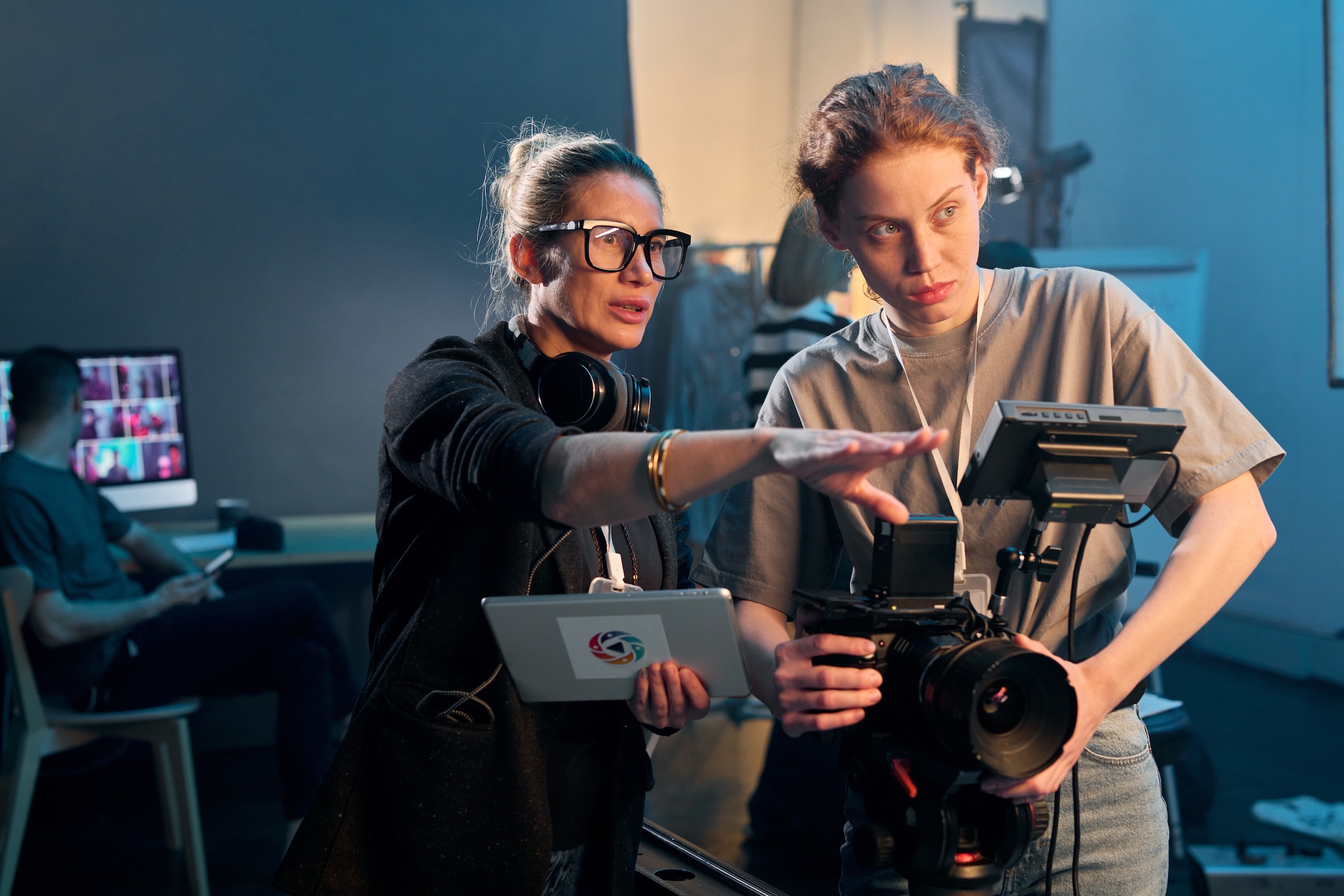
If you picture a career in filmmaking, you might imagine yourself either in front of the camera or calling the shots behind it. Acting. Directing. Maybe winning an Oscar in a dramatic acceptance speech. But the truth is, those roles are just a tiny slice of a much bigger, more collaborative creative ecosystem.
Careers in film and media are far more diverse than most aspiring filmmakers realize. From shaping a film’s visual world to crafting sound, story, and structure, there are countless filmmaking careers that keep the industry moving and bring stories to life. In this blog, we’ll explore seven behind-the-scenes film careers you may not have considered and how a film degree can open the door to meaningful, creative work in the industry.
What Does a Film Crew Do? Exploring the Roles Behind the Camera
A film crew is the team of skilled professionals who bring a production to life behind the scenes. They’re the people building the world, shaping the look, capturing the sound, keeping the schedule moving, and solving problems in real time; all so the story on screen feels seamless. Film crew jobs are what turn an idea into something audiences can actually watch.
And here’s the good news: if you don’t see yourself in front of the camera (or you’re not interested in being the one “in charge”), there are still plenty of ways to build a creative, hands-on career in the film industry. Crew-based roles are collaborative, practical, and deeply artistic in their own right. They let you be part of the storytelling process, work alongside other creatives, and gain real on-set experience while finding a career that fits your strengths.
7 Underrated (and Essential) Careers in the Film Industry
When people talk about careers in film, the spotlight usually lands on actors and directors. But filmmaking is a team sport, and there are hundreds of people behind the camera to make a movie or TV show happen. If you’re curious about different types of jobs in the film industry, these careers show just how many ways there are to build a creative life in film production.
Cinematography: How to Get into Cinematography
Cinematographers (also called directors of photography) are responsible for how a film looks on screen. They make decisions about camera placement, movement, framing, and lighting to visually tell the story alongside the director.
What does that mean day to day? A cinematographer works closely with the director to plan shots, choose lenses, design camera movement, and collaborate with the lighting team. It’s a strong career path for visual storytellers who enjoy both artistic decision-making and technical production work.
If you’re wondering how to get into cinematography, most professionals start by building technical skill through programs like a BFA or MFA, gaining set experience, and developing a strong portfolio of work.
Screenwriting: What Does a Screenwriter Do (and How Do You Become One)?
Screenwriters develop the story blueprint for film and television. That includes plot structure, character arcs, dialogue, pacing, and scene construction, all of which take place long before a production team ever steps onto a set.
So what does a screenwriter do in practice? A lot of the job is drafting, revising, and collaborating on scripts based on feedback from producers and directors while keeping the story coherent and compelling.
Screenwriting demands patience and a deep understanding of story craft. An MFA in Screenwriting, such as the one at MSMU, can help writers hone that muscle, develop a strong portfolio, and learn how to pitch and polish scripts in a professional setting.
Filmmaking Grip: The Backbone of On-Set Production
A grip in filmmaking is the crew member responsible for camera support and movement, as well as many types of on-set rigging. Grips help make shots physically possible and safe to execute.
Depending on the project, a grip might help set up dollies, track, mounts, flags, or rigging for lighting and camera setups. They work in tandem with the camera and electrical departments, especially when a shot requires complex movement or precision.
While the job is technical, it’s also creative. Grips collaborate closely with cinematographers and gaffers to make ambitious shots possible. If you enjoy hands-on, fast-paced tasks, grip work might be for you.
Filmmaking Gaffer: What Does a Gaffer Actually Do?
In filmmaking, a gaffer is the head of the electrical department and the person responsible for executing the lighting plan on set. Day-to-day, gaffers manage lighting equipment, coordinate the electrical crew, and work directly with the cinematographer to create lighting setups that match the story’s tone and visual goals.
Lighting isn’t just about visibility. It shapes mood, depth, and realism, and can completely change how a scene feels. Gaffers play a major role in shaping a film's final look and feel.
Casting Director: Matching Characters to Faces
Film production relies on hundreds of people to make a movie or show, but audiences only see the faces of the main cast. Casting director careers are one of the most pivotal roles in production by finding performers who can bring the story to life. They manage auditions, review submissions, coordinate callbacks, and collaborate with the director and producers to make final casting decisions.
This role requires strong judgment, communication skills, and an understanding of story and character. Casting directors are experts at matching tone, chemistry, and performance style to the film's world.
Sound Design: Technical Careers in the Film Industry
Sound design is one of the most important technical careers in film production, and it’s also one of the easiest to overlook when it’s done well. Sound designers and audio post-production teams shape what the audience hears and feels, from ambient noise to footsteps to intense musical moments.
Sound design can include dialogue cleanup, Foley, sound effects, audio layering, and mixing. It’s the difference between a scene that feels flat and a scene that feels immersive. This career path is a strong fit for people who are detail-oriented, technically skilled, and interested in how sound influences storytelling and emotion.
Costume Design for Film: Bringing Characters to Life
Costume design is storytelling through wardrobe. Costume designers plan and create the clothing characters wear to reflect the film's time period, personalities, status, professions, and emotional shifts.
Costume design for film might include research, fittings, sourcing or building garments, continuity tracking, and collaborating with the hair and makeup and art teams. Because wardrobe is part of the visual world, costume design often connects directly to color palettes, setting, and tone.
How to Get a Job in Film: Building Experience, Networks, and Skills
Let’s be honest: getting a job in film can be difficult. Not because you’re “not good enough,” but because the film industry can feel like a maze. The industry doesn’t always follow a straightforward “apply here, get hired there” path, and there’s still a stigma that filmmaking isn’t a “stable” career. In reality, film is skilled, collaborative work; building a career in it takes strategy, consistency, and the right support.
To get started, focus on three things:
-
Hands-on experience: student productions, internships, and entry-level film crew jobs help you build credits and confidence
-
Collaboration skills: reliability, communication, and being easy to work with matter just as much as raw talent
-
Relationships and mentorship: many opportunities come through referrals, repeat collaborations, and strong networks
An MFA can help by turning trial-and-error into a clearer path. With structured production opportunities, faculty mentorship, and a built-in creative community, you’re able to build real skills and a portfolio while making professional connections along the way.
Read more: Is an MFA in Film Worth It? Here’s What You Gain Beyond the Screen
Why MSMU’s Graduate Programs Help You Stand Out in Filmmaking Careers
For many aspiring filmmakers, the biggest challenge isn’t passion, it’s logistics. You may already be working full-time, supporting a family, or building stability in another career—but breaking into film doesn’t require a total life reset. MSMU’s Filmmaking MFA programs in the heart of Los Angeles are designed for that reality, helping working professionals build momentum in the industry without stepping away from the life they’ve already built.
With a flexible program structure to fit your busy schedule, you can keep moving forward in your personal and professional life while gaining the hands-on experience that film employers actually look for. The MFA programs include:
-
Access to a Hollywood studio
-
Hands-on production training with emerging technologies
-
Faculty mentorship that extends beyond the classroom
-
Opportunities connected to the entertainment ecosystem
MSMU also blends creative development with the business side of media, so you graduate with both a stronger artistic voice and a clearer understanding of how to navigate real-world projects, teams, and career pathways.
Unlock Entertainment Media Careers with a Film Degree
Filmmaking is one of the most collaborative industries out there, with a wide variety of unique career paths. Whether you’re shaping the look of a scene, building the soundscape, designing the world, or supporting the crew behind the camera, there’s real creative purpose in the dozens of roles that make productions possible.
At MSMU, our graduate film programs prepare students for a wide range of careers in the film industry by combining creative freedom, close mentorship, and professional readiness in one degree. If you’re ready to explore where your strengths fit in the industry, learn more about MSMU’s graduate film programs.
Key Takeaways
-
Filmmaking careers go far beyond acting and directing. The industry runs on behind-the-scenes roles that are creative, skilled, and essential.
-
Film crew jobs are collaborative by nature. If you want to build stories without being on camera or “in charge,” there are plenty of meaningful paths.
-
Roles like cinematographer, screenwriter, gaffer, and sound designer shape the audience experience as much as the performances do.
-
An MFA can help you build momentum faster by providing structure, mentorship, and production experience you can point to professionally.
-
MSMU’s graduate film programs are designed for working adults, allowing you to grow your craft and career without putting your life on pause.

